
Removing the standing water is just part of the job. It is the water you don’t see – absorbed by drywall, traveling up the studs, hiding beneath the tile or trapped in the concrete floor – which is responsible for the swelling, musty smell and mold weeks down the road. Structural drying is the process of removing that water from the building materials itself, utilizing dehumidification and air movement equipment, and confirming it with moisture measurements. Arizona Water Damage Experts performs structural drying and dehumidification services throughout Arizona.
Whether it is an accidental water damage issue caused by a broken supply line in a two-story in Chandler (85226) or a slab leak in a ranch-style house in Tucson (85718), we determine our drying objectives from moisture measurements taken from unaffected building materials from your own home.
Licensed & Bonded
Insured & Bonded
Same-Day Response
Workmanship Guaranteed in Arizona
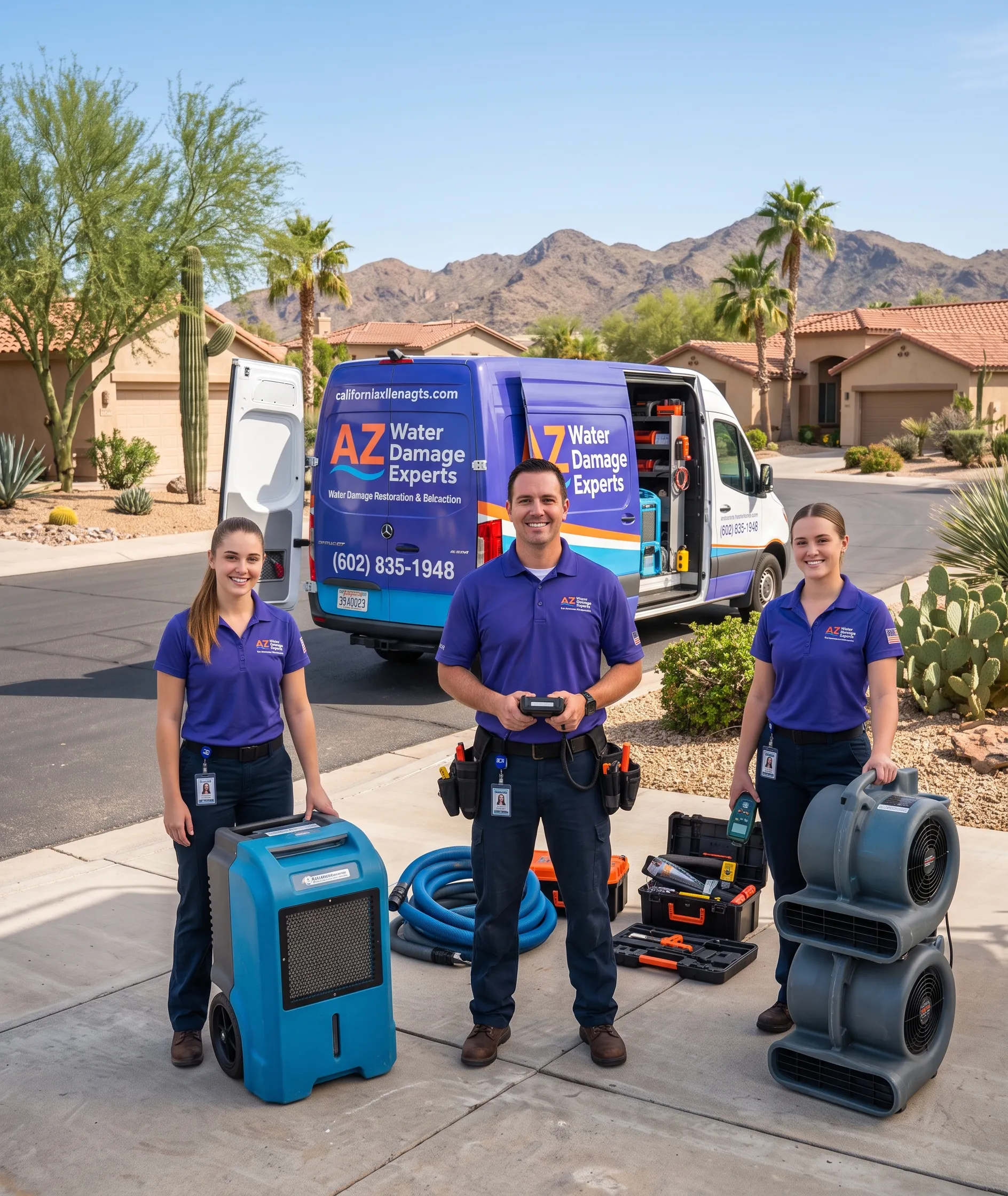
Drying a building is a process that involves managing three aspects: airflow across wet surfaces, the level of humidity, and temperature. Air movers will force the evaporation process to remove moisture from the wet material. The dehumidifier then takes the moisture out of the air to prevent it from condensing again into the structure. It all comes down to balancing these two elements depending on the level of moisture within the building and the materials it soaked.
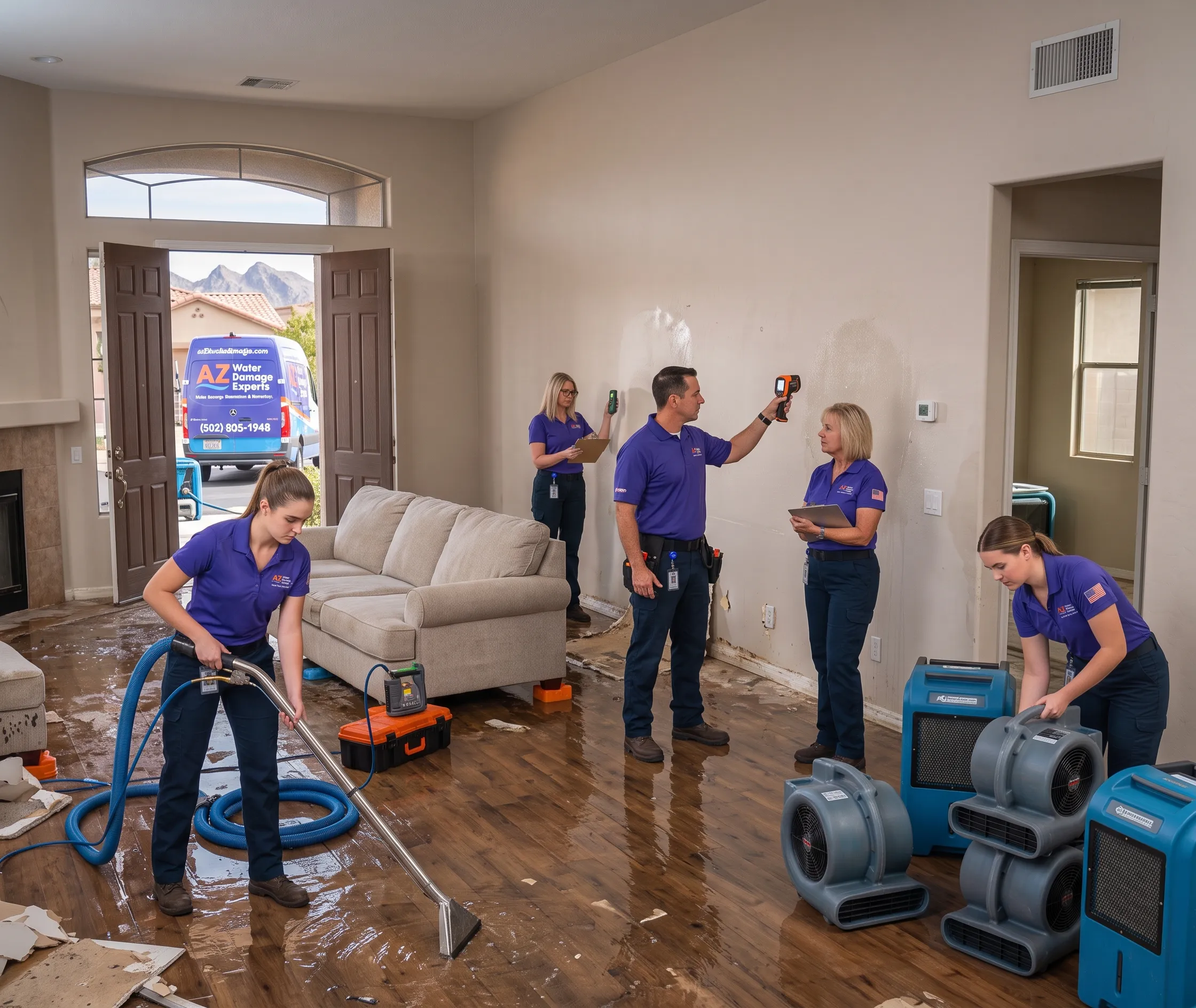
First, we conduct testing to determine the extent of damage. Moisture meters and thermal imaging technology reveal which areas have been affected by water intrusion. The measurements of dry, unaffected materials found within your house become our goal. This information is used to place various equipment according to the amount: low grain refrigerant (LGR) dehumidifiers are used for most cases, desiccant systems in some situations, wall cavity drying system blowing the air through walls without complete removal, and mats for hardwood/slab drying.
While Arizona’s arid climate makes drying easier throughout the year, it does not offer an easy way out. As the monsoons hit and the dew points increase, drying time will be reduced due to increasing indoor humidity levels. Materials such as block walls, stucco, tile on slab and enclosed wall cavities take longer to dry than what one sees on the surface.
Whether we did the extraction or another company did, here is how a structural drying job begins.
We use meters and thermal cameras to trace exactly where water went, including inside walls, under cabinets and beneath flooring.
Readings from unaffected materials in your home tell us what dry looks like for your drywall, framing, wood floors and slab.
Dehumidifiers, air movers and specialty systems are placed according to the room size, materials and amount of water, not a rule of thumb.
We return each day to log moisture levels, move equipment where drying is slow and remove it from areas that have reached goal.
Make sure the source is shut off. Mop or wet vac any standing water you can safely reach, and lift area rugs off wet carpet so they do not bleed dye.
Open cabinet doors and closet doors near wet areas to let air reach them. Keep your AC running normally. Turning the house into an oven does not dry walls and can spread mold spores.
Put foil or plastic under furniture legs or move pieces to a dry room to prevent staining and rust marks. Then call us at (602) 835-1948 to schedule drying.
A room can feel dry and still hold enough moisture to cause problems. Watch for these.
Particleboard and MDF baseboards swell when they absorb water from wet drywall or flooring. Swelling that continues days later means the wall is still wet.
If a room smells fine with the AC running but musty when the house is closed up, moisture is still trapped somewhere, often under tile or inside a wall cavity.
Wood flooring that cups with edges higher than the center is still absorbing moisture from below. It needs targeted drying before it can flatten.
Drywall, framing and wood floors that start drying within a day or two can usually be saved. Wait a week and swelling, delamination and mold make removal the only option. Call Arizona Water Damage Experts and we will get drying equipment in place fast.

Desert air dries puddles quickly, but building materials are a different story. These are the reasons structural drying matters here.
Most Arizona homes are slab on grade. When water gets under tile or into the slab, it releases slowly and can keep baseboards and drywall wet long after the surface looks dry.
Concrete block and stucco exteriors absorb water and hold it. Interior drywall attached to them can stay damp unless the cavity is dried directly.
From July through September, outdoor dew points rise sharply. Indoor air holds more moisture, and drying takes longer without the right dehumidification.
Water that runs into wall cavities, behind kitchen cabinets and under bathtubs has no air flow. These spots need specialty drying or controlled removal.
Structural drying follows a measured process so you only remove what has to go and only pay for drying days you actually need.
We trace every wet area with meters and thermal imaging, record readings on a moisture map and set drying goals based on your home's dry materials.
Only materials that cannot be dried in place, such as saturated pad, swollen particleboard or wet insulation, are removed. Small holes or removed baseboards allow cavity drying.
LGR or desiccant dehumidifiers, air movers and wall cavity or floor drying systems are placed and balanced to the conditions in each room.
Readings are logged daily, equipment is adjusted, and the job is closed out only when every material meets its drying goal, with a final report for your records.
Water damage can take different forms, and thus each requires a unique treatment. Arizona Water Damage Experts provides all types of water damage repair services under one roof so that you will not have to juggle many contractors.
🛠️
A full restoration service following any leaks, flooding or appliance problems, all extraction, drying, cleaning and repair in one visit by a qualified team. View Service
💦
Rapid extraction of water using truck-mounted and portable extractors, preventing water from penetrating further into floorboards and wall cavities. View Service
🌀
Careful containment and remediation of mold growth along with the solution to the underlying moisture problem to ensure that the mold does not recur. View Service
Moisture detection, thermal imaging and laboratory testing to locate concealed mold problems and inform you precisely what you are up against. View Service
Extraction of trapped water, replacement of wet drywall and insulation, drying out and a complete reconstruction of the stained or sagging ceiling. View Service
Water extraction, mud removal, cleaning, and drying after storm water damage. View Service
Careful cleanup and sanitation after sewage damage with containment measures. View Service
Structural drying of walls, floors, and framing using LGR dehumidification and air movement techniques with daily moisture content logging. View Service
Photos, moisture content documentation, and scope of work that get your insurance claim moving faster with fewer hassles. View Service
Quick water damage cleanup and drying from burst pipes and plumbing leaks. View Service
Fast and flexible water damage repair for office buildings, restaurants, retail and apartment complexes. View Service
Storage of furniture, electronics, clothes, and valuables during restoration work at your property. Learn More about Service
Water damage cleanup and drying of ceilings, attics and closets in case of AC condensate leaks, as well as prevention tips. Learn More about Service
Moisture detection and drying of damaged floors and walls due to slab leaks. Learn More about Service
Leak extraction and water damage drying in garages, closets and utility rooms. Learn More about Service
Costs of drying rely on the number of rooms affected by water leakage, what kind of materials absorbed water, and for how long the equipment has to be operated. Daily monitoring ensures the validity of the schedule.
| Service | Typical Price Range |
|---|---|
| Single room drying (2 to 3 days) | $800 to $1,800 |
| Multi-room drying (3 to 5 days) | $1,800 to $4,500 |
| Whole-floor or large loss drying | $4,500 to $10,000+ |
| Wall cavity drying system (per wall) | $150 to $400 |
| Hardwood floor drying mats | $400 to $1,500 |
| Desiccant dehumidifier (per day) | $200 to $500 |
| Daily moisture monitoring and logs | Included in project |
Most Arizona drying jobs finish in three to five days. Water under tile, inside block walls or in hardwood floors can take longer. We remove equipment room by room as each area reaches goal, so you are not paying for machines in rooms that are already dry. Drying after a sudden loss is usually part of a covered claim, and our logs show the adjuster why each day was needed.
If another company pulled equipment after two days and something still smells off, or you are not sure your home is truly dry, call us. Arizona Water Damage Experts will take readings, explain what we find and finish the job properly.

Successful drying is invisible: floors stay flat, walls stay solid and no mold appears months later. These are typical drying projects we complete.
Before
After
1
A burst upstairs supply line in a Chandler (85226) home sent water through the ceiling into the kitchen below, soaking cabinets, drywall and tile.
We removed the toe kicks to dry under the cabinets, used a wall cavity system on the kitchen walls, and ran LGR dehumidifiers for four days with daily readings.
The cabinets were saved, only a small section of ceiling drywall was replaced, and the claim was supported by four days of moisture logs.
2
A previous company had dried a Mesa (85206) family room for two days after a water heater leak, but a musty smell returned a week later.
Our readings showed the slab and the block wall behind the drywall were still wet. We removed baseboards, opened small drying holes and ran equipment for three more days.
Readings reached goal, the odor disappeared and no mold developed.
3
A slab leak under the hallway of a Tucson (85718) home soaked engineered wood flooring through three rooms during monsoon season.
We used floor drying mats on the wood, a desiccant dehumidifier to handle the high indoor humidity, and logged readings for five days.
Most of the flooring flattened and was saved, avoiding a full floor replacement.
Immediate response, honest opinion, and dry home top the list of concerns of the customers.
We had some kind of leak on our roof at midnight. They responded to us in less than two rings and arrived there in under an hour. They kept cool heads and handled things for us, saving our floor from getting ruined.
J
Jessica
Homeowner, Mesa
We were completely confused after getting flooded by rains in our garage. They helped us clean up, dry everything out, and even told us about the insurance process.
S
Carlos
Homeowner, Tucson
The doubled bills were what made us realize that there was a slab leak in our house. With the help of their tools, they found out the source of the problem and dried it up thoroughly. Since then, we have not seen even a hint of mold.
M
Amanda
Homeowner, Scottsdale
The sprinkler line burst during the weekend and caused an office flooding. We were up and running in two days. Professional indeed.
E
Robert
Business Owner, Phoenix
I have several rental houses and I depend on their services. They communicate with the tenants, give full report to the insurance firm and do everything within the stipulated time.
D
Linda
Property Manager, Chandler
Our pipes burst in very cold weather when we were away from home. They quickly arrived to dry out the whole bottom floor.
L
Mark
Homeowner, Flagstaff
We provide structural drying and dehumidification for homes and businesses across the Phoenix metro, the East and West Valley, Tucson and Pinal County, including second-opinion drying when another company’s work did not finish the job. Cities we serve include:
Arizona
Arizona
Arizona
Arizona
Arizona
Arizona
Arizona
Arizona
Arizona
Arizona
Arizona
Arizona
Arizona
Arizona
Arizona
Arizona
Arizona
Arizona
Arizona
Arizona
Arizona
Arizona
Arizona
Arizona
Arizona
Arizona
Arizona
Arizona
Arizona
Arizona
Arizona
Arizona
Arizona
Arizona
Arizona
Arizona
Arizona
Arizona
Arizona
Arizona
Arizona
Arizona
Arizona
Arizona
Arizona
Arizona
Arizona
Structural Drying Chandler, AZ
85226
Structural Drying Peoria, AZ
85382
Structural Drying Fountain Hills, AZ
85268
Structural Drying Oro Valley, AZ
85737
Structural Drying Maricopa, AZ
85138
Drying problems often hide in places you cannot see. Here are three common situations and how they were handled.
Water from a dishwasher leak ran under a kitchen island and stayed trapped beneath the cabinets and tile for days.
We removed the toe kicks, injected dry air under the cabinets, and used dehumidifiers until the subfloor and cabinet bases met goal.
Check under the dishwasher and sink every few months for drips or a damp floor.
Drywall in a bedroom read dry on the surface, but thermal imaging showed a cool, wet band inside the wall after a toilet supply line failure.
We removed the baseboard, drilled small holes behind it and dried the cavity with a wall drying system, then patched and repainted.
Replace toilet and faucet supply lines with braided stainless lines every five to seven years.
During monsoon season, a large living room was drying slowly because indoor humidity was high.
We added a desiccant dehumidifier, sealed the room from the rest of the house and brought humidity down so drying could finish.
Run your AC normally during drying. Turning it off makes the house more humid and slows drying.
Answers to common questions about structural drying and dehumidification in Arizona.
Drying & dehumidification of structures refers to the elimination of excess water in building structures such as walls, floors, ceilings, and frames after being exposed to moisture due to water damage. AZ Water Damage Experts employs professional drying equipment to restore moisture in the affected areas.
Professional structural drying helps eliminate hidden moisture that may exist inside walls, under floorings, and in other building structures. The existence of moisture in building structures can cause material breakdown, odor production, and molding even in the dry atmosphere of Arizona.
The time required for professional drying depends on several factors, including the amount of water, the affected materials, humidity levels indoors, and the level of damage. AZ Water Damage Experts can examine your property and develop an effective drying strategy according to your specific needs.
Common equipment used in professional structural drying includes industrial dehumidifiers, high-speed air movers, moisture meters, and special drying equipment.
Proper and comprehensive structural drying will help greatly decrease chances of mold growth because drying will eliminate moisture that mold needs to grow. Drying alone, however, cannot fix mold problems that have already occurred, so areas that have been contaminated with mold may need more evaluation.
Yes, even the tiniest leak can create moisture pockets behind walls, under the flooring, in cabinets, etc. Proper moisture inspection will reveal if additional drying and dehumidifying is needed to help prevent future water damage.
No. Although humidity level outdoors in Arizona can be relatively low, indoor moisture that results from plumbing leaks, appliance malfunctioning, roof leaks, or floods can become trapped inside building materials. Structural drying will help to ensure that all moisture pockets are found and dealt with properly.
Structural drying is capable of drying water-damaged drywall, wood framework, subflooring, concrete, ceiling, carpeting, and other water-damaged building materials. Drying method varies depending on type of material and extent of its damage.
Arizona Water Damage Experts dries homes and businesses across Arizona to measured standards and backs every job with daily moisture logs. Call (602) 835-1948 to get drying started or to get a second opinion on a job that does not feel finished.

Leaking, flood, or storm damage? Contact us any time and we’ll send a team to you immediately.
Inquire about no-cost estimates, costs, insurance claim assistance, and direct billing to your insurance company.
Priority response services for your properties.
Fill out the form below and we’ll get back to you within 24 hours.